
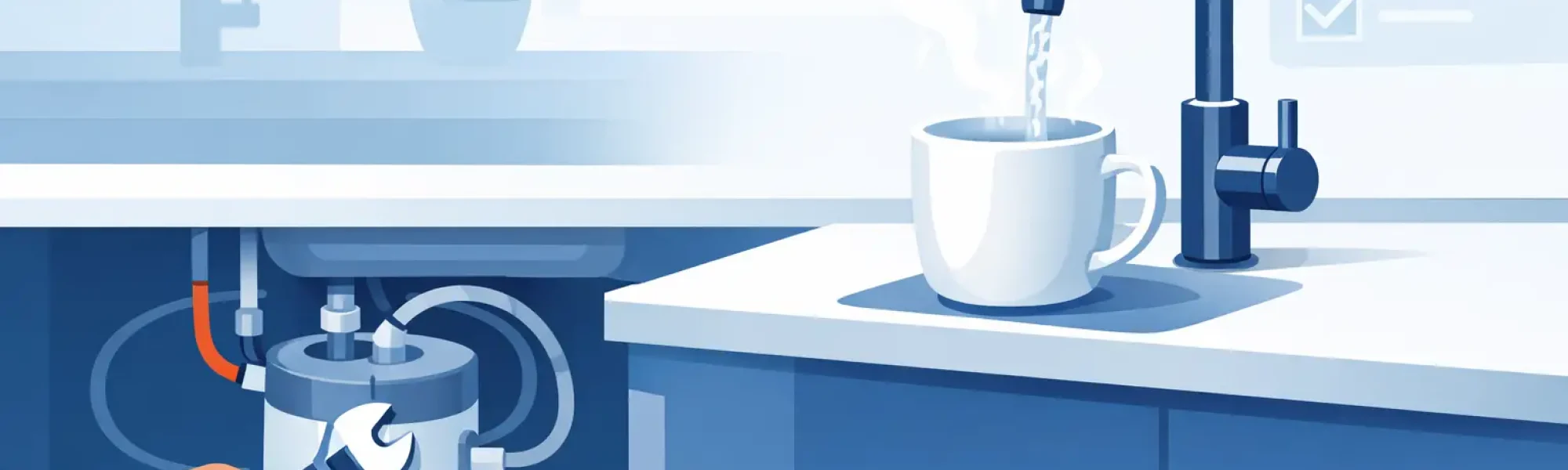
A hot water dispenser can make a busy kitchen, break room, or beverage station work better every day. It delivers near-boiling water at the sink for tea, coffee, instant meals, cleaning tasks, and food preparation without waiting for a kettle. However, hot water dispenser installation is more involved than placing a small tank beneath the counter. The unit needs a safe water connection, adequate electrical power, proper mounting, and careful adjustment to protect the fixture, cabinet, and people using it.
For homeowners and commercial property operators in Palm Beach County, a professional installation helps prevent the small problems that can become expensive ones: cabinet leaks, loose fittings, tripped circuits, an undersized dispenser, or water that is set too hot for the application.
What a Hot Water Dispenser Installation Includes
Most under-sink hot water dispensers have three main components: a dedicated faucet at the countertop, a compact heated tank inside the cabinet, and a cold-water supply connection. The faucet dispenses heated water from the tank, while the supply line refills it as water is used. Some systems also include a filter or are paired with a reverse osmosis system for better-tasting drinking water.
The first step is confirming that the chosen location can support all of those parts. The sink deck or countertop must have room for the dispenser faucet and a properly drilled opening if one is not already available. Beneath the sink, there needs to be enough cabinet clearance for the tank, supply tubing, shut-off valve access, and normal use of the sink drain and garbage disposal.
A trained plumber also checks the existing cold-water stop valve. Older valves may not shut off completely, may be corroded, or may not have the correct connection for a branch line. Replacing a worn shut-off valve during installation is often the better long-term choice. It allows the dispenser to be serviced later without interrupting water to the main kitchen faucet.
The tank itself should be mounted according to the manufacturer’s requirements, not simply set loosely in the cabinet. Proper placement protects the water lines from kinks and keeps the unit accessible for future inspection, temperature adjustment, or replacement.
Plumbing Connections Need More Than a Tee Fitting
The cold-water supply is typically divided with a tee fitting so the sink faucet and dispenser can operate from the same source. While that sounds straightforward, the connection must be compatible with the existing plumbing materials and installed without stressing the supply line. A connection that is overtightened, cross-threaded, or fitted with the wrong adapter can leak slowly inside a cabinet for weeks before anyone notices damaged flooring or swollen cabinetry.
A plumber will shut off the water, install the appropriate branch connection, connect the dispenser tubing, and test every joint under pressure. The tank must then be filled completely before power is turned on. Energizing an empty tank can damage its heating element.
Water quality can also affect the installation decision. In parts of Palm Beach County, mineral content and treatment chemicals may contribute to scale buildup over time. If the home already has a water softener, reverse osmosis system, or filtration equipment, the plumbing layout should be reviewed to determine whether the dispenser should receive filtered water. Filtered water may improve taste and reduce mineral deposits, but it should be configured according to the equipment manufacturer’s guidance.
Electrical Requirements and Safety Checks
Most residential hot water dispensers plug into a standard grounded outlet beneath the sink. That outlet must be in good working condition and positioned where the plug, cord, and connections remain dry. The unit should not be connected through an extension cord or overloaded power strip inside the cabinet.
In some kitchens, the available outlet is already used by a garbage disposal, dishwasher, or other appliance. Whether a shared circuit is acceptable depends on the dispenser’s electrical demand, the circuit capacity, local code requirements, and the appliances already operating there. If the circuit is overloaded or the receptacle is damaged, an electrician may need to correct the issue before installation.
Commercial installations may have different considerations. A break room, restaurant prep area, office beverage station, or healthcare facility may need a higher-capacity unit or a location that serves more users. The plumbing and electrical systems must support that demand. Choosing a residential-style tank for a high-use commercial setting can lead to slow recovery times, frequent cycling, and premature equipment wear.
Choosing the Right Dispenser for the Space
The right unit depends on how often hot water is needed and how it will be used. A small tank can be a practical choice for one household that wants quick tea and coffee water. A larger-capacity unit may better fit a family kitchen, employee break room, or shared workspace where several people use it throughout the day.
Temperature range matters as well. Many dispensers provide water close to boiling, but the actual output temperature can be adjusted. Higher settings are useful for hot beverages and cooking, yet they also increase the risk of scalding. Households with young children, older adults, or anyone with limited hand mobility should consider a faucet with a safety handle and select a temperature that matches everyday needs rather than simply using the highest setting.
Faucet finish and style are often part of the decision, especially during a kitchen update. A dispenser faucet can complement the main kitchen faucet, but appearance should not outweigh serviceability. Select a unit with readily available replacement parts, a clear warranty, and enough under-sink clearance for maintenance.
Common Installation Problems to Avoid
A hot water dispenser is compact, but it shares crowded space with drain piping, the sink basin, disposal wiring, cleaning supplies, and sometimes water treatment equipment. Planning prevents the most common installation issues.
Problems often arise when the tank is squeezed against the garbage disposal, tubing is sharply bent behind stored items, or a filter is added without leaving access for cartridge changes. Another concern is using an existing countertop hole that is the wrong size or placed too close to the backsplash, making the faucet difficult to install or use.
Leaks deserve immediate attention, even when they appear minor. A few drops at a supply tee, faucet shank, or tank connection can damage particleboard cabinets and create conditions for mold growth. After installation, the system should be checked while the tank fills, after it heats, and again after several dispensing cycles.
It is also wise to label the dispenser shut-off valve if it is separate from the main sink shut-off. In a leak or service situation, clear access can save time and limit water damage.
Maintenance Keeps the Unit Reliable
Hot water dispensers do not require constant service, but they should not be forgotten after installation. Periodically inspect the tubing and fittings for moisture, corrosion, or discoloration. Keep the cabinet area dry and avoid stacking heavy items against the tank or water lines.
If the dispenser begins producing less hot water, takes longer to recover, makes unusual noises, or develops a change in taste, it may need inspection. Mineral scale, a failing heating element, a worn faucet component, or a water quality issue can all affect performance. Filtered systems need cartridge changes on the recommended schedule, and the tank may require cleaning or replacement after years of use.
For property managers, routine inspection is especially helpful in vacant units, offices, and common-area kitchens where a small under-sink leak may go unnoticed. Including dispenser connections in regular plumbing maintenance can protect cabinets and avoid disruption for residents, staff, or customers.
When Professional Installation Is the Better Choice
A homeowner may be comfortable replacing a simple faucet, but a dispenser installation can uncover hidden issues with aging shut-off valves, limited electrical capacity, cramped cabinetry, or incompatible water treatment connections. Professional service is particularly valuable when installing a dispenser with reverse osmosis equipment, changing countertop openings, replacing a damaged valve, or fitting a unit in a commercial setting.
North County Plumbing can assess the existing plumbing, make the required connections, test the system, and help ensure the dispenser is ready for reliable use. If a leak, failed shut-off valve, or electrical concern is discovered during the process, addressing it before the cabinet is closed up is the practical way to protect the investment.
A properly installed hot water dispenser should feel simple once it is in service. That simplicity comes from getting the water connection, power source, mounting, temperature setting, and final leak testing right from the start.