
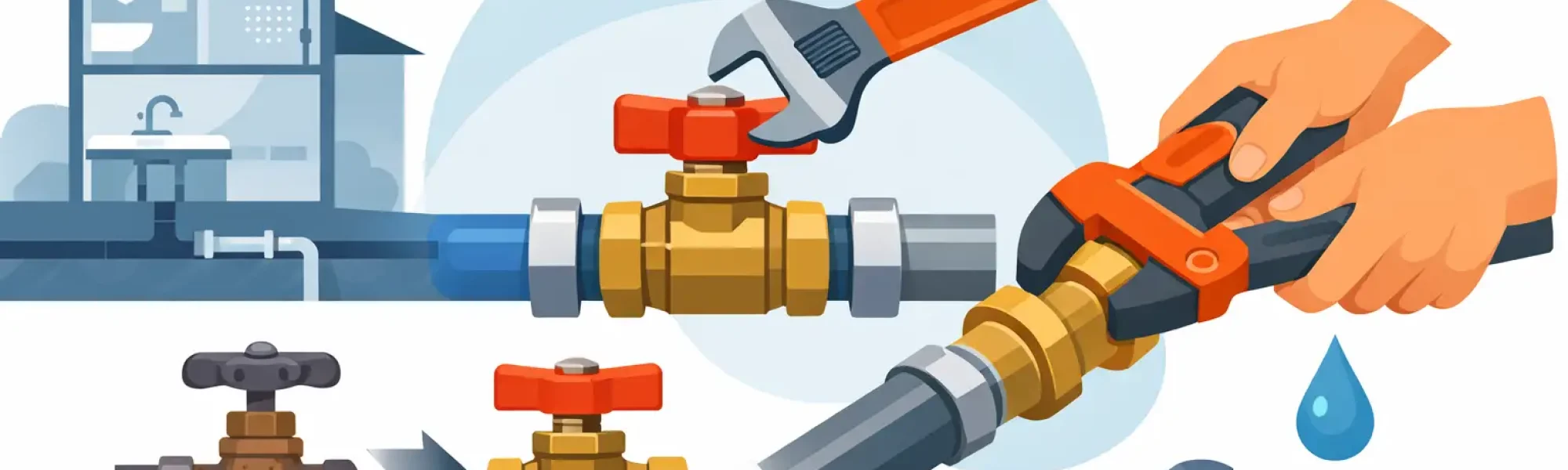
A main water shut off valve replacement is not the kind of repair most property owners think about until a pipe leaks, a fixture fails, or water is already spreading across the floor. When the main valve will not fully close, turning off the water to protect the property becomes difficult or impossible. Replacing a worn, corroded, or unreliable valve restores a basic level of control over your plumbing system.
For homeowners, that control can prevent a small plumbing problem from becoming a major cleanup. For property managers and commercial operators, it can reduce disruption, limit water damage, and make planned plumbing repairs safer to complete. A dependable main shut-off valve is a small component with an important job.
What the Main Water Shut-Off Valve Does
The main water shut-off valve controls the water supply entering a home, business, or individual unit. It is commonly located near the water meter, where the water line enters the building, in a utility area, or outside in a meter box. Closing this valve should stop water flow to most or all interior plumbing fixtures.
This is different from the curb stop or meter valve controlled by the water utility. The property-side main shut-off valve is the valve a plumber or owner may use when repairing a leaking toilet supply line, replacing a water heater, installing a fixture, or responding to a burst pipe.
Many older properties have gate valves. These use a round handle and an internal gate that moves up and down. Gate valves can corrode, seize, leak around the stem, or fail to close completely after years of limited use. Modern ball valves use a lever handle and a rotating internal ball. They provide a clearer open-or-closed position and are generally more reliable for emergency shutoff use.
Signs You May Need Main Water Shut Off Valve Replacement
A valve does not need to be actively leaking to be a problem. In fact, a valve that has not been operated in years may reveal its condition only when an emergency occurs. Testing the valve periodically is helpful, but do not force a handle that is stuck or heavily corroded.
Replacement should be considered when the valve will not turn, requires excessive force, turns without reducing water flow, or drips from the handle area or body. Water around the valve, green or white corrosion on copper connections, rust on metal parts, and a visibly damaged handle are also warning signs.
Another common issue is partial shutoff. The valve may appear to close, yet faucets continue running or water pressure remains strong throughout the building. A small amount of leftover water can drain from pipes after a valve is closed, but ongoing flow usually means the valve is not sealing properly.
A planned replacement is also sensible before major plumbing work. If a water heater replacement, bathroom renovation, repiping project, or water treatment installation is scheduled, an unreliable shutoff valve can delay the work. Replacing it before the larger project begins gives the plumber a dependable way to isolate the water supply.
Why a Failed Shutoff Valve Creates Bigger Risks
When a supply line ruptures, every minute matters. A failed main valve can allow water to continue feeding a leak while the owner searches for the utility shutoff, waits for water service assistance, or tries to limit damage with buckets and towels. In Palm Beach County, where many homes and commercial properties may be unoccupied for portions of the year, an unchecked leak can cause extensive damage before anyone sees it.
A working valve also protects the plumbing system during routine repairs. Without it, a plumber may need to shut water off at the meter, coordinate with the utility where required, or work around a valve that does not fully isolate the line. These conditions can add time and complexity to what should be a straightforward repair.
There is a safety consideration as well. Water near electrical equipment, outlets, appliances, or mechanical systems can create hazards beyond damaged floors and walls. The ability to stop water quickly is part of responsible property maintenance.
What Happens During Main Water Shut Off Valve Replacement
The right replacement method depends on the valve location, pipe material, condition of the existing connections, and whether the line is accessible. A licensed plumber begins by confirming which valve serves the property and determining how water will be shut off during the work. This may involve the meter-side shutoff or coordination with the water provider.
Once the supply is off, the plumber relieves pressure and drains water from the affected piping. The old valve may be removed by cutting and reconnecting pipe, unscrewing threaded fittings, or using another appropriate method for the pipe material. Copper, PVC, CPVC, PEX, galvanized steel, and commercial piping systems each require the proper connection technique.
In many cases, a full-port ball valve is installed because it provides dependable operation and strong water flow when open. The handle position makes it easy to see whether the valve is open or closed. However, the best valve and connection method depend on the existing plumbing and local installation requirements.
After installation, the plumber restores water service, checks the new valve for leaks, confirms that it fully shuts off water when closed, and verifies that fixtures have normal pressure when it is open. If the property has a pressure regulator, water treatment system, backflow assembly, irrigation connection, or other equipment near the incoming supply, those components should also be considered during the inspection.
Why This Repair Is Usually Best Left to a Professional
Replacing a main valve can look simple, especially when it is exposed in a garage or utility room. The difficulty is that the work begins with shutting off the water to the very pipe being repaired. If the meter valve does not operate properly, if old pipe breaks during removal, or if the new connection leaks after service is restored, the repair can quickly become more involved.
Older copper and galvanized piping deserves particular caution. Corrosion may weaken fittings that appear sound from the outside. Applying force to a failing gate valve or threaded connection can damage nearby pipe and create a larger repair area. Some valves are also located in tight exterior boxes, walls, or areas with limited access.
A professional plumber has the equipment to isolate the supply, make durable pipe connections, test the installation, and address unexpected conditions without leaving the property exposed. For commercial buildings, professional service also helps ensure the work is coordinated around occupants, operating hours, water-dependent equipment, and any required backflow protection.
Cost and Timing: What Affects the Job
The cost of main water shut off valve replacement varies because the valve itself is only one part of the work. An accessible valve on sound pipe can often be replaced more efficiently than a valve in a meter box, behind a finished wall, or connected to heavily corroded piping. Material type, pipe size, the need for utility coordination, and after-hours service can also affect the scope.
It is usually less expensive and less disruptive to replace a questionable valve before it fails during an emergency. Still, replacement is not always necessary. If a valve operates smoothly, closes completely, and shows no signs of leakage or corrosion, a plumber may recommend periodic testing and monitoring instead.
For an active leak, a valve that will not close during a plumbing emergency, or damage to the incoming water line, prompt service is the better choice. North County Plumbing provides 24/7 plumbing response for Palm Beach County properties when water control cannot wait.
How to Prepare Your Property for Service
Before the plumber arrives, clear stored items away from the valve area if it is safe to do so. Make sure access is available to the water meter, garage, utility room, mechanical closet, or other location where the supply enters the building. If you manage a commercial property, notify affected occupants about the planned water interruption and identify any equipment that depends on continuous water service.
Ask where the new valve will be located and how it should be operated. A clearly accessible, labeled valve helps family members, staff, tenants, and maintenance personnel act quickly when needed. After replacement, operate the valve occasionally according to the plumber’s guidance so it does not sit untouched for years.
A dependable main valve is quiet protection for the entire plumbing system. If yours is hard to turn, leaking, corroded, or unable to stop water completely, scheduling an inspection now can spare your property a much more urgent decision later.