
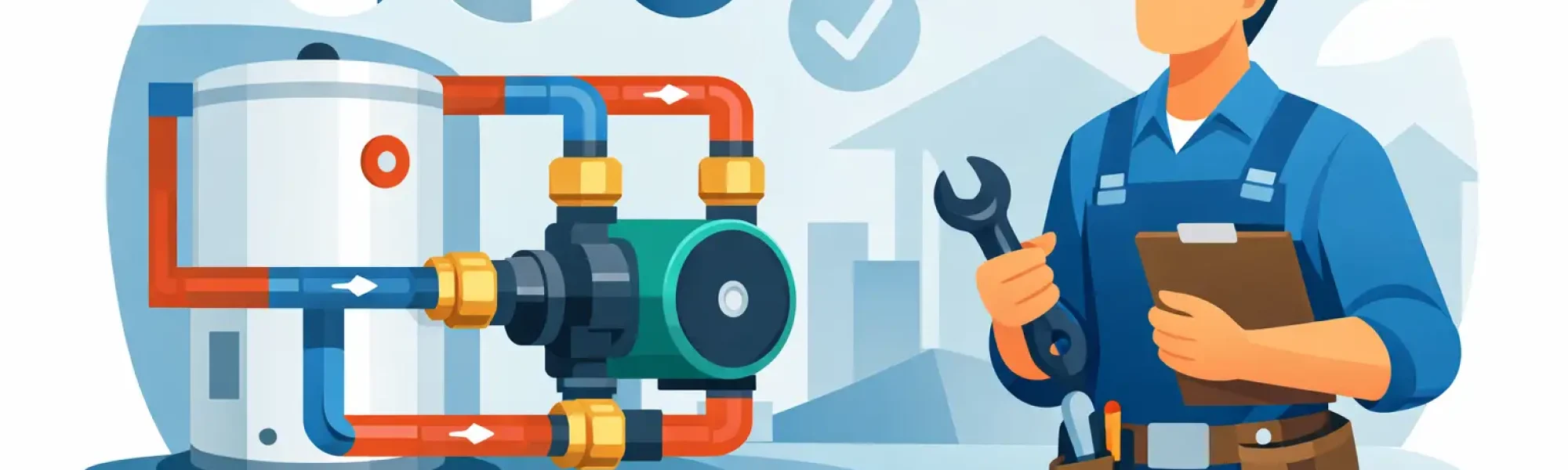
Waiting for hot water to reach a distant bathroom, kitchen sink, or break-room fixture can waste gallons of water every day. A professional recirculating pump installation service addresses that delay by keeping hot water available closer to the fixture, so residents, guests, employees, and customers spend less time standing at the tap.
For Palm Beach County homes and commercial properties, the right system depends on the building layout, water heater type, plumbing configuration, and how hot water is used. A recirculating pump is a practical upgrade, but it should be selected and installed correctly to provide convenience without creating unnecessary energy use or maintenance concerns.
What a Recirculating Pump Does
A hot-water recirculating pump moves cooled water from the hot-water line back toward the water heater. Instead of allowing hot water to sit in long pipe runs and cool between uses, the pump helps maintain warm water near the fixtures that need it most.
The immediate benefit is simple: less waiting for hot water. That can be especially useful in larger homes where the primary bathroom is far from the water heater, in properties with a detached suite, or in commercial spaces with restrooms and sinks located across the building.
There is also a water-conservation benefit. Without recirculation, the water sitting in the line is commonly sent down the drain while users wait for the temperature to rise. Reducing that waste can be meaningful for busy households, multifamily properties, offices, restaurants, and other facilities with frequent handwashing or cleanup needs.
A pump does not make a water heater produce more hot water than it is rated to provide. If a household regularly runs out of hot water, the solution may involve water-heater repair, replacement, capacity planning, or a different water-heating approach. Recirculation improves delivery speed, not the heater’s total recovery capacity.
When a Recirculating Pump Installation Service Makes Sense
The strongest reason to consider recirculation is consistent frustration with long hot-water wait times. If occupants routinely let a shower run for several minutes or avoid a particular sink because it takes too long to warm up, the plumbing layout may be a good candidate for evaluation.
A recirculating pump can also make sense during a remodeling project. When walls, flooring, cabinets, or plumbing connections are already being updated, it may be easier to install a dedicated return line or make other system improvements. Planning early gives the installer more options and can avoid redoing finished work later.
For commercial property operators, convenience is only part of the calculation. Faster hot-water delivery can improve restroom usability, support sanitation routines, and reduce complaints from tenants, staff, or customers. The appropriate system should be sized for the building and coordinated with the existing commercial water heater, circulation piping, valves, and controls.
That said, not every property needs a recirculating pump. A compact home with a centrally located water heater and short pipe runs may see limited benefit. A qualified plumber should assess the distance to fixtures, current water-waste concerns, electrical access, and expected usage before recommending an installation.
Choosing the Right Recirculation System
There are two common approaches, and the existing plumbing often determines which option is most practical.
Dedicated Return-Line Systems
A dedicated system uses a separate return pipe that carries cooled water back to the water heater. This arrangement is often found in larger homes and commercial buildings, or it may be installed during new construction and major renovations.
Because the return line is designed for recirculation, it generally offers an efficient, durable solution when properly sized and controlled. Installation can be more involved when a return line does not already exist, since adding piping may require access behind walls, above ceilings, or below floors.
Comfort-Valve or Crossover Systems
When there is no dedicated return line, some systems use a valve installed beneath a sink farthest from the water heater. The valve creates a temporary path between the hot- and cold-water lines, allowing cooled water in the hot line to return toward the heater through the cold line until the desired temperature is reached.
This option can be less invasive for an existing home, but it has trade-offs. The cold-water line may be temporarily lukewarm after a circulation cycle, which may not suit every household or application. The system should also be installed with the correct valve arrangement and controls to prevent unwanted performance issues.
Timers, Temperature Controls, and Demand Pumps
Pump controls matter as much as the pump itself. A timer can operate the system during predictable high-use periods, such as mornings and evenings. Temperature-based controls cycle the pump when water in the line cools below a set point. Demand-controlled systems run when activated by a button, motion sensor, or smart control.
Running a pump continuously can provide quick hot water, but it may increase energy consumption and place more operating time on the equipment. A controlled schedule or demand-based setup is often a better fit for properties where hot-water use follows a routine. The best choice depends on the owner’s convenience goals, energy priorities, and occupancy pattern.
Why Professional Installation Matters
A recirculation system involves more than attaching a pump near the water heater. Proper installation requires attention to pipe routing, flow direction, shut-off valves, isolation connections, check valves, electrical supply, control settings, and compatibility with the water-heating system.
Incorrect installation can lead to noisy pipes, poor circulation, unnecessary energy use, cross-flow between hot and cold water, or premature wear on the pump. In some cases, an existing issue such as a failing check valve, sediment buildup, undersized piping, or an aging water heater should be corrected before recirculation is added.
A professional evaluation also helps identify code and safety considerations. Gas, electric, solar, tankless, and commercial water heaters can have different installation requirements. The plumber should confirm that the equipment is appropriate for the system and that service access remains available for future maintenance.
North County Plumbing provides professional water-heating and recirculating-system work for homeowners and property operators who want clear guidance before making an upgrade. The goal is not simply to install a pump, but to install a system that performs reliably for the property it serves.
What to Expect During Installation
The process typically begins with an inspection of the water heater, nearby plumbing, and the fixtures with the longest wait times. The plumber will determine whether a dedicated return line exists, where the pump and controls should be located, and whether the system needs additional valves or electrical work.
Before work begins, ask how the system will be controlled and what changes you may notice at the fixtures. For example, a crossover system may briefly affect cold-water temperature at one sink, while a timer-based system may need seasonal or schedule adjustments. Understanding these details upfront prevents surprises after installation.
Installation may include shutting off water, isolating the water heater, mounting the pump, connecting piping, installing check or comfort valves, and setting up the selected controls. Once the system is operational, the plumber should test circulation, check for leaks, verify fixture temperatures, and explain normal operation.
In an occupied commercial property, scheduling matters. Restroom closures, kitchen downtime, or temporary water interruptions should be planned around business hours whenever possible. A contractor experienced with commercial plumbing can coordinate the work to reduce disruption while maintaining a safe, properly functioning installation.
Maintaining a Recirculating Hot-Water System
Most recirculating pumps require limited routine attention, but they should not be forgotten after installation. Periodic inspection can catch leaks, unusual noise, failed controls, or declining performance before they become larger problems.
Hard-water conditions can affect valves, fixtures, and water-heating equipment over time. If scale buildup is a recurring concern, water-treatment options and regular water-heater maintenance may help protect the complete hot-water system. Tankless water heaters, in particular, may need scheduled flushing based on water quality and use.
If hot water suddenly takes longer to arrive, the pump runs constantly, the cold water feels warm, or there is vibration near the water heater, schedule a plumbing inspection. These symptoms can point to a control setting, valve issue, circulation problem, or another plumbing condition that needs professional attention.
A well-planned recirculation system should make daily routines easier without demanding daily attention. Start with an on-site assessment, ask how the system will operate in your specific property, and choose an installation approach that supports dependable hot water for years to come.