
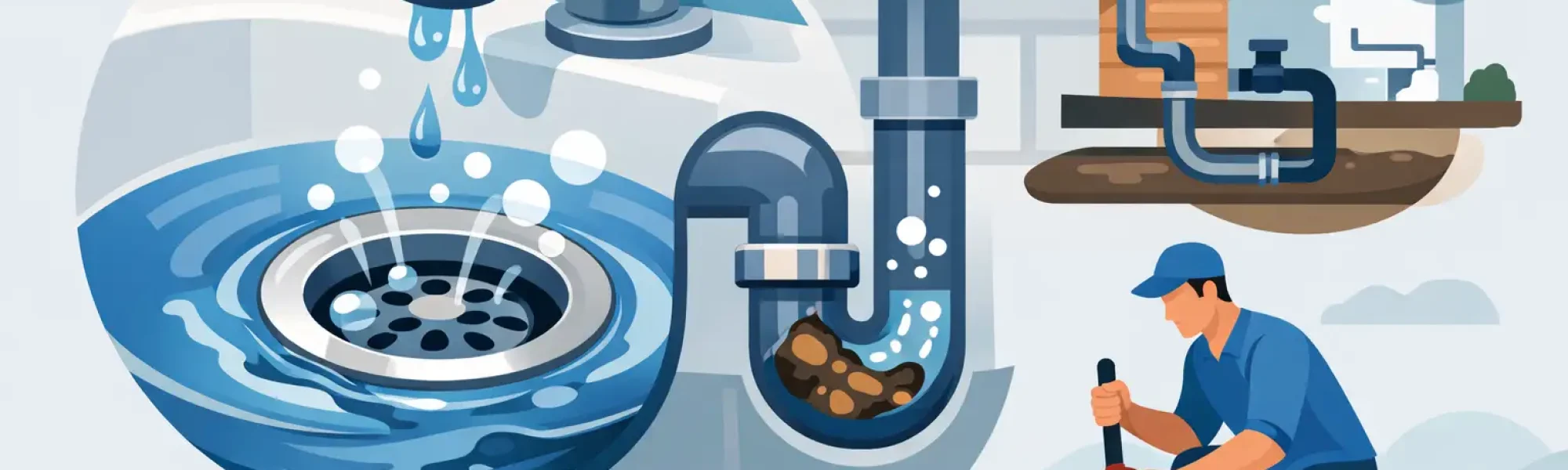
A gurgling drain is more than an annoying sound after the sink empties or the toilet flushes. It is often your plumbing system telling you that air cannot move where it should. When wastewater travels through a properly working drain line, air moves through the vent system to keep pressure balanced. When a blockage, vent issue, or sewer-line problem disrupts that balance, the air may force its way back through a nearby drain.
If you are asking, why is my drain gurgling, pay attention to which fixture makes the noise, when it happens, and whether water is draining slowly. Those details can help distinguish a simple local clog from a developing sewer problem that needs professional service.
Why Is My Drain Gurgling?
Drains need both a clear path for water and a clear path for air. Every sink, shower, tub, and toilet connects to a drain system designed to carry wastewater away while preserving a small amount of water in the fixture trap. That trap water blocks sewer gases from entering the building.
As water moves down a drain, it can create suction and pressure changes. Plumbing vents, which generally run upward through the roof, allow air into and out of the drain system to prevent those pressure changes from pulling water out of traps or pushing air back through fixtures.
A gurgling sound occurs when trapped air bubbles through water. It may happen in one fixture after using that fixture, or in a shower or tub when a toilet flushes. The second situation is particularly useful information: it often means the fixtures share a drain line and a restriction is affecting the system farther downstream.
The Most Common Reasons for a Gurgling Drain
A partial clog is restricting the drain line
A partial clog is the most common cause. Grease, soap residue, hair, food particles, paper products, mineral scale, and other buildup can narrow the inside of a pipe. Water may still pass through, but air cannot move freely around it. The result is slow drainage, bubbling, or a gurgling sound.
A kitchen sink may gurgle because grease and food debris have accumulated in the branch drain. A bathroom sink or tub may have hair and soap buildup near the fixture. These problems can sometimes begin as a minor inconvenience and gradually become a complete blockage.
The plumbing vent is blocked or damaged
A vent obstruction can produce similar symptoms even when the drain pipe itself is reasonably clear. Leaves, nesting material, debris, or a damaged vent pipe can reduce airflow. In South Florida, storm debris and animal activity can contribute to roof-vent issues.
Vent diagnosis is not usually a do-it-yourself roof task. Roof access creates safety concerns, and the visible opening does not always reveal where the restriction is located. A plumber can evaluate the drain and vent system, then determine whether the problem is a blocked vent, a damaged pipe, or a downstream drain restriction.
A sewer-line blockage is affecting multiple fixtures
When more than one fixture gurgles, drains slowly, or backs up, the issue may be in the building sewer line rather than at a single sink or tub. A toilet flush that causes water to bubble in a shower drain is a common warning sign. So is a washing machine discharge that makes a nearby toilet or tub react.
Sewer-line blockages can result from accumulated waste, grease, wipes, roots entering pipe joints, pipe damage, or a sagging section of line that repeatedly collects debris. Older properties can be more vulnerable to deteriorated piping, but any sewer line can develop a blockage.
This is not a problem to ignore. Continued use can turn a gurgling drain into a wastewater backup inside the property.
The trap has dried out or lost its water seal
A floor drain, guest bathroom sink, shower, or utility drain that is rarely used may gurgle or produce a sewer odor because its trap has dried out. In this case, running water into the fixture for a minute may restore the water seal and stop the odor.
However, a dry trap alone does not usually explain repeated gurgling when other fixtures are used. If the sound continues after the trap has been refilled, there may be a venting or drainage issue behind it.
An improperly installed or undersized drain system
Gurgling can also occur after remodeling, fixture replacement, or changes to a commercial space. Improper pipe slope, inadequate venting, incorrect drain sizing, or poor fixture connections can interfere with normal drainage. These issues may be noticeable from the first day a new fixture is used, or they may become apparent once the system handles heavier demand.
A professional inspection is especially worthwhile when the issue began after construction work. Clearing a drain may provide temporary relief, but it will not correct an installation problem.
What You Can Safely Check First
Start by observing the pattern. Test fixtures one at a time. Run the bathroom sink, flush the toilet, drain the tub, and operate the kitchen sink. Note whether one fixture gurgles on its own or whether using one fixture affects another. Also check for slow drains, standing water, foul odors, and water rising in a tub or shower.
For a single slow sink, you can remove visible debris from the stopper and clean the accessible portion of the drain. A plunger designed for sinks may help with a minor localized clog. Use it gently and cover the sink overflow opening with a wet cloth to create better suction.
Avoid repeatedly pouring chemical drain cleaners into a gurgling drain. Harsh chemicals may not clear a deeper obstruction, can damage certain pipes or fixtures, and create a hazard for anyone who later opens the drain or works on the line. Do not mix products, and do not use a drain cleaner after another chemical product has already been added.
If a toilet is involved, do not keep flushing to see whether the problem improves. A partial sewer obstruction can quickly become an overflow. Reduce water use until the cause is identified when multiple fixtures are reacting.
When a Gurgling Drain Needs Professional Service
A single drain that gurgles occasionally may have a manageable local clog. But several symptoms call for a prompt plumbing evaluation: repeated gurgling, multiple slow drains, sewage odors, water backing up into a shower or tub, a toilet that bubbles when another fixture drains, or any wastewater overflow.
For property managers and commercial operators, a gurgling drain can also be an early operational warning. Restrooms, break rooms, laundry connections, and kitchen drains may share branch lines or larger building drains. Addressing the issue before a backup protects tenants, employees, customers, and the property itself.
A professional drain service may include drain clearing equipment and a video pipe inspection. Video inspection is valuable when a drain keeps clogging or when there is concern about roots, cracked piping, offsets, or buildup farther inside the sewer line. Instead of guessing, the technician can identify the condition and location of the problem and recommend the appropriate repair or maintenance.
North County Plumbing provides drain and sewer diagnostics for Palm Beach County properties, including urgent service when a blockage threatens to become a backup. The right repair depends on what is found. Some drains need targeted clearing, while others require sewer-line repair, vent work, or replacement of damaged piping.
Can You Prevent Drains From Gurgling?
Prevention starts with keeping inappropriate materials out of the plumbing system. In kitchens, keep grease, oil, coffee grounds, and fibrous food scraps out of the drain. In bathrooms, use hair catchers and keep wipes, cotton products, and hygiene items out of toilets, even if packaging suggests they are flushable.
Regular maintenance is particularly helpful for properties with older drain lines, mature landscaping near sewer piping, or a history of recurring clogs. If a drain has already gurgled more than once, treating it as a one-time nuisance can allow a hidden restriction to grow.
A quiet drain is what normal plumbing should sound like. When you hear gurgling, use the pattern of symptoms to act early, before air bubbles become standing water or a costly sewer backup.