
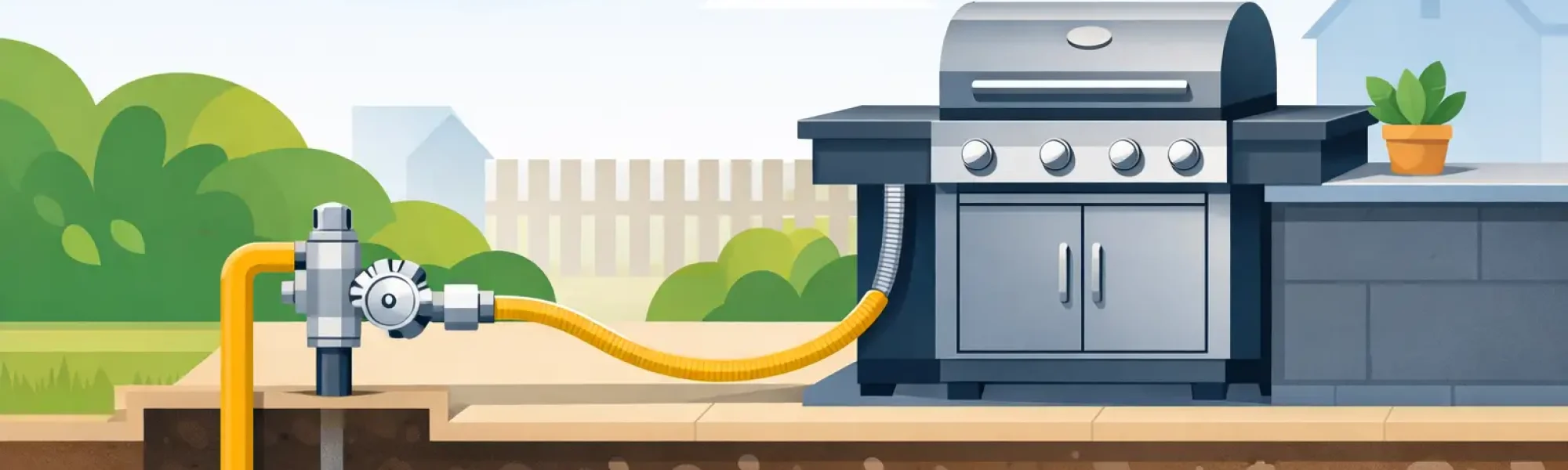
A grill that runs out of propane halfway through a family cookout creates an avoidable interruption. A properly installed natural gas line for BBQ use gives your outdoor cooking area a consistent fuel source without lifting tanks, checking fuel levels, or making last-minute exchanges. It is a practical upgrade for many Palm Beach County homes, but it is not a project to approach as a simple appliance hookup.
A gas line must be sized, routed, protected, tested, and connected correctly. The work affects both the performance of the grill and the safety of the property. Planning the installation with a qualified plumbing and gas-piping professional helps prevent weak flame output, gas leaks, failed inspections, and costly changes after a patio or outdoor kitchen is finished.
Why Homeowners Choose a Natural Gas Line for BBQ Use
The most obvious benefit is convenience. Natural gas is supplied through the home’s existing utility service, so a connected grill has fuel available whenever the gas service is active. There are no cylinders to store, transport, or replace. For homeowners who grill several times each week, that convenience can change how often the outdoor kitchen is used.
Natural gas can also support a more permanent outdoor setup. A built-in grill, side burner, pizza oven, fire feature, or outdoor-rated heater may all require gas planning. Designing the piping for the full outdoor area from the start is often more efficient than adding one small line now and revisiting the system when another appliance is installed later.
There are trade-offs. A natural gas grill needs to remain near its connection point, so it is less portable than a propane model. Natural gas also has a lower energy content per cubic foot than propane, which means a grill must be designed for natural gas or correctly converted using the manufacturer’s approved conversion kit. Simply attaching a natural gas supply to a propane-only grill is unsafe and can damage the appliance.
Start With the Grill and the Gas Load
Before selecting pipe size or mapping the route, identify the grill’s fuel type and input rating. The rating plate or owner’s documentation lists the appliance’s required fuel and BTU demand. That number matters because the gas line must provide sufficient volume and pressure for the grill to operate as designed.
The calculation cannot look at the grill alone. A home’s gas system may already supply a water heater, range, clothes dryer, pool heater, fireplace, generator, or other equipment. Each appliance adds to the total demand on the system. A line that appears adequate for a grill may be too small once the distance from the meter, the number of fittings, and other operating appliances are considered.
A trained technician evaluates the total connected load, available gas pressure, pipe material, route length, and appliance requirements. Proper sizing is especially important when the grill is at the far end of the house or when the outdoor area includes several gas appliances. An undersized line may produce low flames, slow preheating, unreliable burners, or performance problems only when other equipment turns on.
Do Not Assume an Existing Stub-Out Is Ready
Some homes have a capped gas connection near the patio, pool equipment, or exterior wall. That is a useful starting point, but it does not confirm that the line is correctly sized for your new grill. It also may have been intended for a different appliance or installed before changes were made to the home’s gas system.
A professional inspection can confirm the pipe size, valve condition, accessibility, material compatibility, and capacity of the existing line. If it is suitable, the installation may be relatively straightforward. If not, extending or upgrading the piping is safer than forcing an appliance to work on an inadequate supply.
Safe Routing, Shutoff Valves, and Connections
Gas piping should follow a planned route that protects it from physical damage and allows for future service. Depending on the property layout, piping may be run along an exterior wall, through approved building spaces, beneath a patio area, or underground using materials and installation methods approved for that application.
Outdoor conditions deserve attention in South Florida. Moisture, salt air in coastal communities, landscaping equipment, irrigation, and pool-area traffic can all affect exposed components. Proper support, corrosion-resistant protection where required, and careful placement help the system remain dependable over time.
The grill needs an accessible manual shutoff valve so the gas can be turned off without entering the home. The final appliance connection must use approved components intended for outdoor gas service and the specific grill installation. A flexible connector is not a substitute for a permanent gas line, and it should not be routed through walls, buried, stretched, or exposed to damage.
Clearances also matter. The grill must be installed according to its manufacturer requirements, including its distance from combustible walls, overhead surfaces, doors, windows, and vents. Built-in outdoor kitchens need enough ventilation around the appliance and gas components. Cabinetry, counter materials, and nearby electrical equipment should all be considered before finalizing the layout.
Permits and Testing Are Part of the Job
Gas-piping work is regulated because even a small leak can create a serious fire or explosion hazard. Permit requirements vary by municipality and project scope, but professional installation commonly involves code-compliant materials, pressure testing, inspection coordination when required, and a documented safe connection to the appliance.
A pressure test is more than a quick check with soapy water at one fitting. It verifies that the completed piping system holds pressure before it is placed into service. Once the line is active, connection points should still be checked for leaks and the appliance should be tested to confirm proper ignition, burner operation, and flame quality.
Avoid temporary workarounds such as improvised adapters, indoor-only fittings, unapproved hose assemblies, or running a line where it can be pinched by a grill cart or damaged by foot traffic. These shortcuts may save time initially, but they can create hazards and complicate future repairs or inspections.
When to Plan the Gas Line
The best time to install a gas line is often before a patio, paver area, outdoor kitchen, or pool-deck renovation is complete. Access is easier before finished surfaces are in place, and the pipe route can be coordinated with electrical, water, drainage, and lighting work. This can reduce unnecessary demolition and help create a cleaner finished appearance.
That said, an existing patio can still be upgraded. The route may be along an exterior wall, around the home, through an approved underground path, or through another accessible area. The right approach depends on the construction of the home, the location of the meter, utility access, existing appliances, and the desired grill location.
For commercial properties, the planning process is similar but the stakes can be higher. A restaurant patio, community amenity area, clubhouse, or rental property may have multiple users and more frequent equipment use. Equipment capacity, shutoff access, local approvals, and ongoing maintenance should be addressed before installation.
Signs Your Outdoor Gas Setup Needs Attention
A new connection should be inspected if you notice weak or uneven flames, burners that do not light consistently, a strong gas odor, visible corrosion, damaged connectors, or a shutoff valve that is difficult to operate. Do not try to locate a suspected leak with an open flame.
If you smell gas, turn off the gas supply only if it is safe to do so, keep people away from the area, avoid operating electrical switches or appliances, and contact the gas utility or emergency services from a safe location. After the immediate hazard is addressed, have the piping and appliance inspected by a qualified professional before using the grill again.
North County Plumbing provides professional natural-gas piping services for outdoor BBQ connections and related home upgrades throughout Palm Beach County. An on-site evaluation can determine whether your existing gas system has the capacity and safe route needed for the grill you want to install.
A permanent grill connection should make outdoor cooking easier, not add uncertainty. With the line sized for the real demand, protected from damage, and tested before use, your patio can be ready whenever it is time to cook.